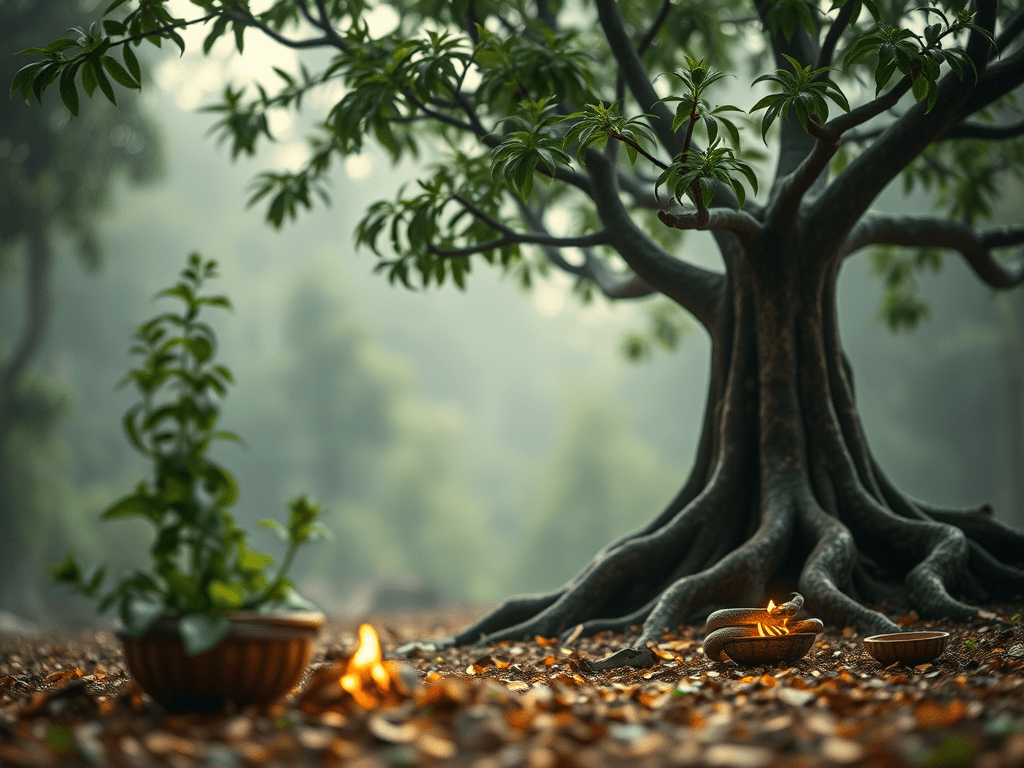
India-where different cultural values, traditions, thinking, and beliefs have always come together to shape a sustainable living for many years. Today, let’s shed some light on these invaluable values passed from generation to generation, which guide our path towards sustainability.
Here, we see Gods not only in idols, but also in animals, plants, and natural elements of the environment.
During “Vat Savitri”-Married women pray to the banyan tree, as they are known for their long lives, so they symbolize the longevity of their husbands. This practice ensures the protection of the banyan tree as it supports biodiversity. Some other beliefs associated with plants are the Tulsi plant, where the plant is married to Lord Krishna. This not only makes the plant sacred but also has many medicinal properties and is considered auspicious to have it in one’s courtyard.
We all know how Gautam Buddha attained enlightenment while meditating under the Peepal/bodhi tree, so this tree is considered very sacred. Peepal tree, whose almost every part is used in Traditional Ayurvedic medicine to treat various ailments, and it also gives out maximum oxygen. Not only that, in some places, the local communities protect areas of the forest, as they think that those areas are associated with deities, known as sacred groves, which help protect the biodiversity of that region.
Here, not plants, but animals are also respected. Many people, especially those who follow Jainism, refrain from killing pests.
Some animals are also worshiped, as people see divinity in them. Many festivals are also associated with them, like Nag Panchami, which honors the nagas, or serpent deities. It is strictly forbidden to harm or kill a snake in any circumstances, as it is considered a sin. Nag Panchami is celebrated on the fifth day of the Shravan month, a month in which everyone follows a strict vegetarian diet, as it is also the breeding month for many animals. This saves many animals, especially fish, from being eaten when they are trying to multiply.
Mountains, rivers, fire, and even water are worshiped, so that people use them consciously and also refrain from polluting. In our region, we worship a river/water body in the close vicinity before the commencement of any special event like a naming ceremony or marriage. In marriages, couples promise on fire for fulfill their vows and duties toward each other. Natural elements hold great significance in Hinduism and are necessary to maintain balance in nature.
We not only heal ourselves with chemicals but also by following the age-old tradition of Ayurveda, this medicinal practice uses herbs and natural fats like ghee combined with yoga for a complete holistic treatment. Here, herbs along with breathing techniques are used for healing.
All the mantras, shlokas, stotras start with gratitude for all elements in nature, which includes animals, plants, too, which shows how we are interdependent and connected through an invisible thread, which is necessary for maintaining ecological and spiritual balance.
Let’s continue following these values and lead India to a sustainable path.
Discover more from
Subscribe to get the latest posts sent to your email.
 aabhaghuli.com